
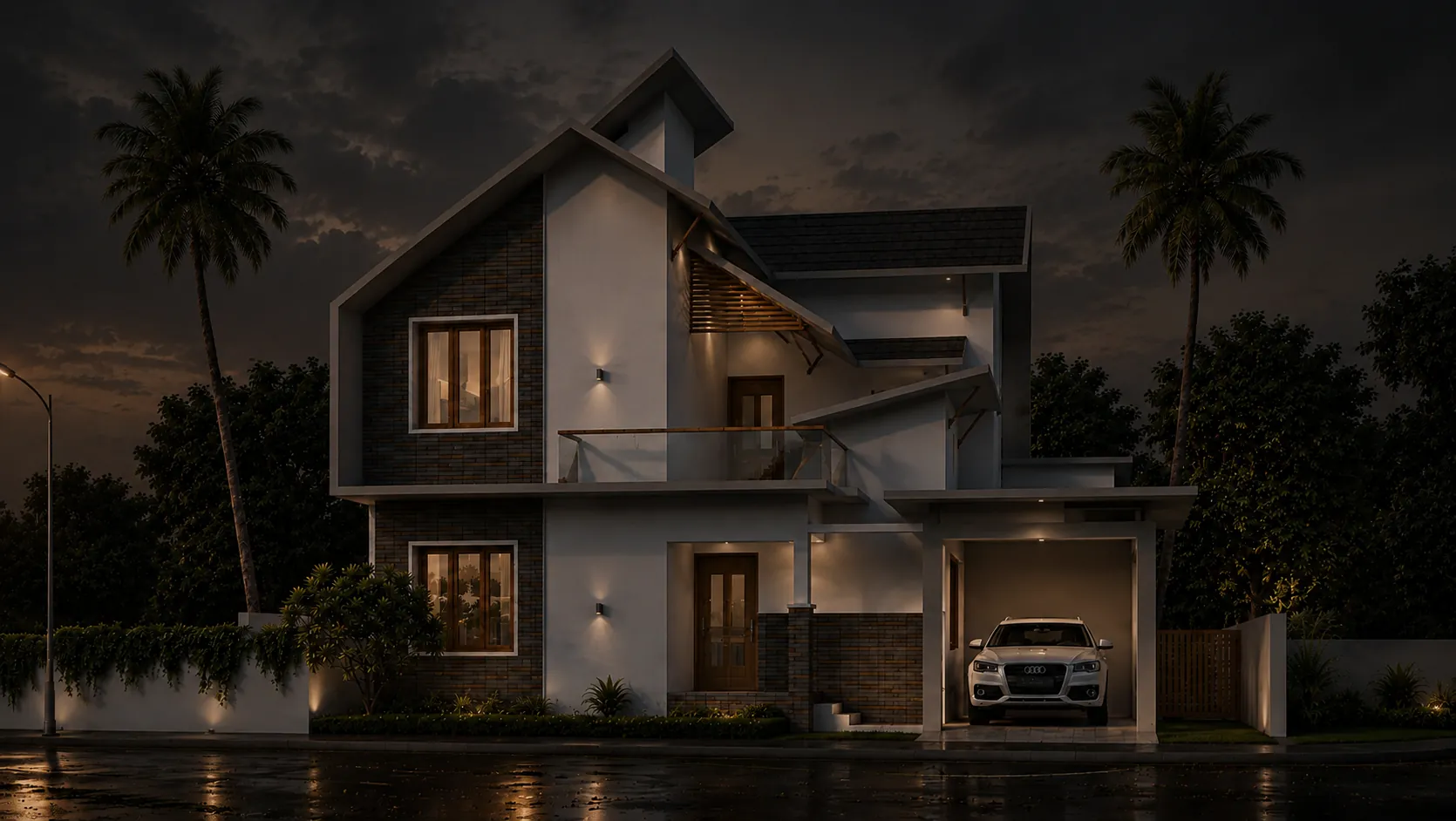
Ask someone in Manjeri where they’d want to raise a family ten years from now, and fewer of them are pointing to a standalone plot on the edge of town. More of them are pointing to a gated villa community. That shift has been building quietly for a few years now, and it’s finally becoming the default choice rather than the exception
Part of it comes down to lifestyle. People here work longer hours, travel more for work, and have less patience for the upkeep that comes with an isolated house. Part of it is simply that Manjeri has grown enough to support this kind of planned living. Whatever the reason, premium gated villas are no longer a niche product for a handful of buyers — they’re becoming the residential format families here are actually planning their future around.
Kerala’s Housing Preferences Are Shifting, and It’s Happening Fast
For a long time, owning a house meant buying a plot and building on it yourself, brick by brick, over years if needed. That’s still common, but it’s no longer the automatic first choice for a lot of buyers, especially younger families and people who’ve spent time working outside Kerala.
What’s changed is expectation. Buyers today want a road that doesn’t flood every monsoon. They want drainage that someone else is responsible for maintaining. They want a neighbourhood that looks the same in five years as it did on the day they moved in. A gated villa project delivers all of that by design, not by luck — which is a big part of why the format is gaining ground so quickly.
The Independent House vs. the Apartment vs. the Gated Villa
Independent houses still win on flexibility — you can build however you like, whenever you like. But they also leave you exposed to whatever happens next door: an abandoned plot, an unplanned road, a neighbour who never finishes construction.
Apartments solve some of that unpredictability but ask you to give up land ownership and, often, any real sense of space.
Gated villas sit in the middle, and increasingly, that middle ground is winning. You still own the land under your home. You still get a private villa, not a shared wall. But you also get the planning, the security, and the shared upkeep that used to be an apartment-only benefit. It’s not really a compromise between the two — for a lot of buyers, it’s simply the better option.
Security Has Stopped Being a “Nice to Have”
A few years ago, a boundary wall and a night watchman were considered enough. That’s changed. Families with young kids, professionals who travel often, parents who don’t want to leave an elderly relative alone in an empty house — for all of them, controlled access and round-the-clock security aren’t extras anymore. They’re the baseline.
This is showing up in how new villa projects get planned. Monitored entry points, proper boundary walls, streets that are actually lit at night — these used to be selling points developers highlighted separately. Now buyers expect them from the start, and projects that don’t offer them struggle to compete.
Building Smarter, Not Just Bigger
The next shift is happening in how homes are designed, not just how they’re secured. Villas that rely on cross-ventilation and orientation to stay cool are becoming more common than ones that lean entirely on air conditioning. Large windows, open layouts, and thoughtful placement of rooms aren’t just aesthetic choices — they cut down on electricity bills for years after the home is built.
This matters more in a place like Kerala, where the climate rewards good design instead of fighting it. Developers who plan around that, rather than around what looks good in a brochure, are the ones setting the pace for what “premium” will mean five years from now.
Manjeri Isn’t Waiting Around Anymore
A decade back, Manjeri was somewhere people passed through on the way to Kozhikode or Calicut. That’s not really true anymore. Roads have improved. Hospitals and schools have opened or expanded. There’s enough commercial activity now that people can live here and not feel like they’re missing out on anything a bigger city offers.
That infrastructure shift is what makes large gated villa projects possible in the first place. You can’t build a 100-villa community and expect it to thrive if there’s no hospital nearby or the roads turn into rivers every June. Manjeri has crossed that threshold, which is exactly why developers are investing here now instead of waiting.
The NRI Factor Nobody Talks About Enough
A good chunk of the demand for premium villas in Manjeri right now is coming from families abroad, or from people who’ve spent years working in Bangalore, Dubai, or Doha and are now looking to settle back home. They’ve lived in planned communities elsewhere. They know what good security and proper maintenance feel like, and they’re not willing to go back to anything less just because they’re moving to a smaller town.
For this group, a gated villa isn’t really an upgrade from what they had — it’s closer to a continuation of it, just rooted back in Kerala. That steady flow of returning buyers is one of the clearest signs that gated villa living isn’t a passing phase here. It’s becoming the expectation.
Where Dhomz Fits Into All This
We didn’t set out to follow a trend — we started building this way because it made sense for the families we were designing for. Every Dhomz project in Manjeri starts with the basics most buyers now expect as standard: wide entrances, round-the-clock security, and enough open, landscaped space that the community doesn’t feel packed in.
What we’ve tried to avoid is treating a villa project as just a row of houses behind a gate. The idea is closer to a small, well-run neighbourhood — one where the roads are maintained properly, the security actually works, and the design holds up ten years after the ribbon-cutting, not just on launch day. That’s the standard we’re building toward, and it’s why more families are choosing to plant roots with us.
Frequently Asked Questions
Why are gated community villas becoming more popular than independent houses?
Mostly because they solve the two biggest frustrations of an independent house — unpredictable neighbourhoods and zero shared maintenance — while still letting you own your land and your home outright.
Is Manjeri actually a good place to settle long-term, or is it still developing?
It’s developed enough to be practical day-to-day — decent roads, hospitals, schools — while still being far more affordable than Kerala’s bigger cities. That combination is a big part of its appeal right now.
Do gated villas cost more than a regular independent house?
Sometimes the upfront cost is a little higher, but you’re also getting security, shared infrastructure, and generally better resale value, which tends to even things out over time.
How do Dhomz villas handle Kerala’s heat and monsoons without relying entirely on AC?
Through layout and orientation — cross-ventilation, larger windows, and rooms placed to catch natural light and airflow rather than trap heat. It’s a design choice, not an afterthought.
Why are so many NRIs specifically choosing Manjeri for gated villas?
A lot of them have already lived in planned, secure communities abroad or in Indian metros. Manjeri now offers something close to that standard, but with the advantage of being home.
Conclusion
None of this happened overnight, and it’s not going to reverse anytime soon. Families want security they don’t have to think about, design that actually works with Kerala’s climate, and a neighbourhood that stays liveable for the long haul — not just for the first few years. Gated villa communities in Manjeri are built around exactly that, which is why they’re quickly becoming the default rather than the alternative.